

October 10, 2026 • ZALT
How Electrolyte Pouches Work (and How They Compare to Sachets and Drinks)
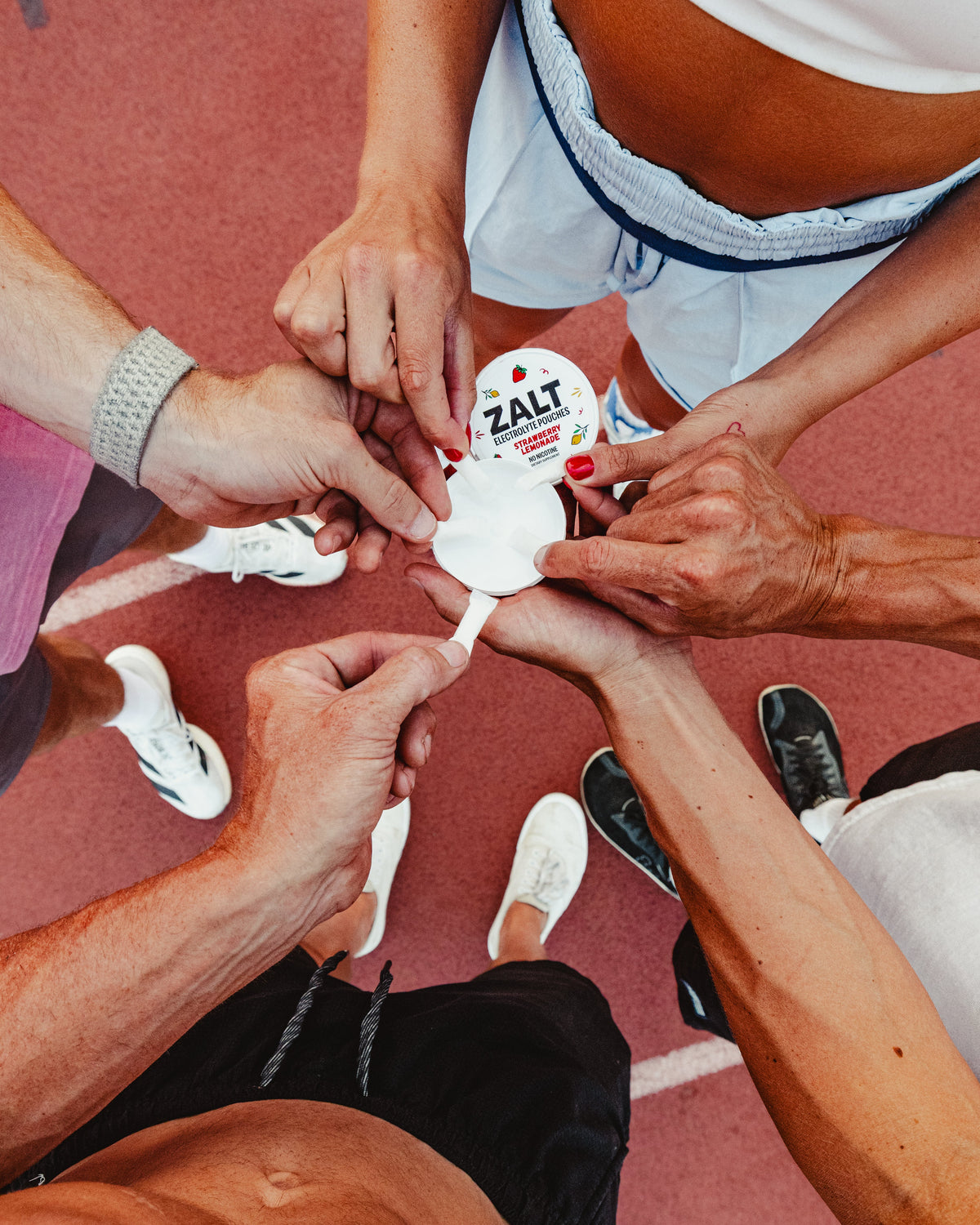
Short answer: a ZALT pouch sits between your lip and gum and releases electrolytes slowly over 30 to 45 minutes, while you keep drinking water like normal. Hydration sachets and sports drinks deliver electrolytes in one dose you have to mix or drink. That makes a pouch easier for steady, all-day use and for moments when a bottle isn't practical. For long, sweaty sessions, a high-dose sachet or drink still does a job a pouch doesn't.
Here's how each one works and when to use which.
How a ZALT pouch works
You place one pouch between your upper lip and gum, the same spot you'd put any oral pouch. It's tobacco-free and nicotine-free. Over the next 30 to 45 minutes it releases its electrolytes and flavor slowly. When you're done, you throw it away.
That's the whole routine. There's nothing to mix, no bottle to carry, and no water required to take it. You still need to drink water, because a pouch doesn't replace fluids. It adds electrolytes alongside the water you're already drinking.
What's in each pouch:
- 190 mg sodium citrate
- 157 mg potassium citrate
- 25 mg French sea salt
- Vitamins B6 and B12
- Zero sugar, zero caffeine, zero nicotine
The milligram figures are compound weights, meaning they include the citrate and chloride as well as the mineral itself. ZALT is sweetened with xylitol and stevia and contains a small amount of MCT oil.
Most people use 2 to 4 pouches a day, and more on hot or heavy training days.
How hydration sachets and drinks work
A hydration sachet (you'll also see them called electrolyte packets or sticks) is a powder you stir into a bottle of water. Brands like LMNT and Liquid I.V. make the best-known ones. Ready-to-drink options like Gatorade and Pedialyte skip the mixing but come in a bottle.
Both formats give you the whole dose at once, and the dose is usually large. They're built around sweat losses, with sodium doing most of the work.
Side by side
Approximate figures from product labels and brand sites as of September 2026. Check your flavor, since numbers vary.

Where a pouch fits better
You can't or don't want to carry a drink. Golf rounds, meetings, flights, hikes, a long drive, a shift where you can't stop. A pouch goes in a pocket and needs nothing else.
You want steady, not spiky. Most people don't need a big sodium hit every time they want to hydrate. A pouch is a lighter, repeatable dose you can take through the day.
You're avoiding sugar. A pouch has zero. A single original Liquid I.V. stick has about 11 g, and a 20 oz Gatorade has about 34 g.
You're fasting. There's no powder to dissolve and no sugar. One honest note: because ZALT has xylitol, stevia and a little MCT oil, strict zero-calorie fasters may want to save it for their eating window.
Cost adds up. At about $0.47 a pouch on subscription, it's roughly a third of the price per serving of the two big sticks.
Where sachets and drinks still win
A pouch is not a replacement for everything, and we'd rather say so than oversell it.
Long, hot or heavy-sweat sessions. If you're out for two hours in the heat, you're losing real sodium and real fluid. A high-sodium stick like LMNT gives you a larger dose, and a drink gives you the fluid itself. Plenty of ZALT users keep a stick around for their longest workouts.
You want fluid and electrolytes in one step. A drink handles both. A pouch only handles the electrolytes, so you still need water.
You want more potassium per dose. Liquid I.V. lists about 370 mg per stick, which is more than a single pouch. For most people food covers potassium best.
You like the ritual. Some people simply enjoy a cold flavored drink, and that's a fine reason to pick one.
So which should you use?
- Pick a pouch for steady, all-day electrolytes with no mixing, no sugar, and no bottle.
- Pick a high-dose sachet for long endurance sessions or heavy sweating.
- Use both if you train hard and live a normal day around it. That's how a lot of ZALT customers do it.
FAQ
Are electrolyte pouches better than hydration sachets?
It depends on the situation. Pouches are easier for steady, all-day use because there's nothing to mix and they carry no sugar. Sachets deliver a larger dose in one go, which suits long or heavy-sweat sessions.
Do I still need to drink water with an electrolyte pouch?
Yes. A pouch adds electrolytes but doesn't replace fluids. Keep drinking water like normal.
How long do you keep a ZALT pouch in?
Most people keep one in for 30 to 45 minutes, depending on flavor.
Does ZALT contain sugar, caffeine or nicotine?
No. ZALT has zero sugar, zero caffeine and zero nicotine. It is sweetened with xylitol and stevia and contains a small amount of MCT oil.
How many pouches can I use in a day?
Most people use 2 to 4 a day, and more on heavy training or hot days. If you have high blood pressure, kidney issues, or you've been told to limit sodium or potassium, check with your doctor first.
This article is for general information and is not medical advice. These statements have not been evaluated by the Food and Drug Administration. This product is not intended to diagnose, treat, cure, or prevent any disease. LMNT, Liquid I.V., Gatorade and Pedialyte are trademarks of their respective owners. ZALT is not affiliated with any of them.